
20-21 October 2026
Business Design Centre - London

Get Your Ticket
Book a stand
  • Why Visit
    • About us
    • A Dedicated Event
    • Network
    • New to Facilities Management
  • 2025 Speakers
    • Speakers
    • Keynote Theatre
    • Innovations Theatre
  • Supporters
  • Exhibitors
    • Exhibitor List
  • Exhibit
    • Why Exhibit
    • Request a media pack
    • Book your stand
  • Contacts
    • Contacts
  • Insights
    • News
    • Blogs
  • FAQs
  • Why Visit
    • About us
    • A Dedicated Event
    • Network
    • New to Facilities Management
  • 2025 Speakers
    • Speakers
    • Keynote Theatre
    • Innovations Theatre
  • Supporters
  • Exhibitors
    • Exhibitor List
  • Exhibit
    • Why Exhibit
    • Request a media pack
    • Book your stand
  • Contacts
    • Contacts
  • Insights
    • News
    • Blogs
  • FAQs
Get Your Ticket
  • Why Visit
    • About us
    • A Dedicated Event
    • Network
    • New to Facilities Management
  • 2025 Speakers
    • Speakers
    • Keynote Theatre
    • Innovations Theatre
  • Supporters
  • Exhibitors
    • Exhibitor List
  • Exhibit
    • Why Exhibit
    • Request a media pack
    • Book your stand
  • Contacts
    • Contacts
  • Insights
    • News
    • Blogs
  • FAQs
  • Why Visit
    • About us
    • A Dedicated Event
    • Network
    • New to Facilities Management
  • 2025 Speakers
    • Speakers
    • Keynote Theatre
    • Innovations Theatre
  • Supporters
  • Exhibitors
    • Exhibitor List
  • Exhibit
    • Why Exhibit
    • Request a media pack
    • Book your stand
  • Contacts
    • Contacts
  • Insights
    • News
    • Blogs
  • FAQs
News
Darren Kibble
News
[ July 23, 2026 0 Comments ]
[
]

University financial crisis puts campus estate strategy under renewed scrutiny, says property expert

The growing financial pressures facing UK universities should prompt institutions to fundamentally rethink how they use, manage and invest in their estates, according to a leading property expert.

The comments follow a series of high-profile announcements across the higher education sector. The University of Dundee has confirmed plans to cut a further 190 jobs as it seeks to address a significant financial deficit, despite already reducing its workforce by around 675 roles through voluntary redundancies. Meanwhile, the University of Exeter has unveiled proposals that would reduce staffing by the equivalent of around 150 full-time posts as part of measures to secure its long-term financial sustainability.

Separately, new analysis by the British Academy has highlighted the scale of the challenge facing higher education, revealing that almost 4,000 academic posts in the humanities, social sciences and arts were lost in a single year, raising concerns over the long-term resilience of universities across the UK.

According to Darren Kibble, Director at Landwood Group, the financial pressures facing universities are forcing institutions to examine not only staffing and teaching provision but also whether their estates remain fit for purpose.

Darren, who is a former associate director for estates and facilities at the University of Salford, said: “For decades, university estates were largely designed around growth. Institutions expanded their campuses, invested in new buildings and increased capacity to accommodate rising student numbers.

“Today, many universities face a very different challenge. Rising operating costs, changing patterns of learning, greater competition for students and financial pressures mean institutions need to ask whether every building continues to support their academic and financial objectives.”

Rather than focusing solely on expansion, Darren believes universities are increasingly adopting estate strategies centred on optimisation.

“Utilisation has become one of the most important measures available to estates teams,” he said.

“Many universities have buildings that are only occupied for part of the working week, while others continue to maintain ageing facilities that no longer meet modern teaching requirements. Hybrid learning, flexible timetabling and changing course delivery models are all altering how campuses are used.”

He says decisions about future investment should be informed by detailed evidence, including occupancy data, condition surveys, maintenance records and energy performance.

“Understanding how buildings are performing allows universities to make informed decisions about refurbishment, consolidation or disposal,” Darren explained.

“Condition is becoming just as important as utilisation. Much of the UK’s higher education estate is now several decades old and requires significant investment simply to remain operational. Deferred maintenance continues to increase both financial liabilities and carbon emissions.”

While redevelopment will remain appropriate in some circumstances, Darren believes refurbishment can often provide better long-term value.

“Improving existing buildings through targeted investment in building fabric, mechanical and electrical systems and energy efficiency can reduce operating costs while supporting institutional net zero ambitions,” he said.

He also expects universities to continue exploring new ways of generating greater value from their estates through partnerships with commercial organisations, healthcare providers, local authorities and developers.

“Universities are increasingly recognising that the estate is not simply a collection of buildings,” Darren added.

“It is a strategic asset. Property valuations, development appraisals and market intelligence all help institutions understand not only what their assets are worth today but also how they can support future financial resilience.

“The universities that emerge strongest from the current financial pressures will be those with the clearest understanding of how every building contributes to operational efficiency.”

s300_cabinet-office
News
[ July 15, 2026 0 Comments ]
[
]

£43 million of savings for the taxpayer due to closure of 14 government buildings

The Government Property Agency’s (GPA) Annual Report and Accounts (ARA) for 2025/26, published today, shows four of these buildings were in the capital as the Plan for London progresses. The programme has secured £17.5 million in annual savings through these closures, procurement negotiations and Net Zero initiatives. The number of government buildings in the city now stands at 28, compared to 79 in 2017.

The other closures were located across the UK, including in cities such as Leeds, Cardiff and Leicester. 

Cabinet Office Minister, Anna Turley said: “By reducing our reliance on inefficient London offices, we are creating a leaner, fairer government estate that belongs to the whole country.

We have reshaped our estate to drive economic growth in every region, ensuring a career in the Civil Service is accessible to talent right across the UK, not just within Whitehall.”

Mark Bourgeois, CEO at the GPA said: “We are pleased to publish our Annual Report and Accounts for 2025/26, which was a year of further stabilisation at the GPA, where we continued to evolve to ensure better delivery for our clients and the taxpayer, while strengthening our operating model and leadership.

“We now look forward to building on these achievements throughout 2026/27, ensuring we continue to support the government’s missions and achieve our aim to create a smaller, better and greener office estate.”

Throughout the year, we secured notable benefits across our portfolio and for the government – evidenced by the opening of the 26 Whitehall Government Hub, closure of 14 offices and further implementation of property technology – ensuring civil servants have access to more digitally-enabled offices. 

The GPA has also secured £25.4 million in commercial savings in the past year, via re-procurements and negotiations with contractors. This surpassed our £20 million target.

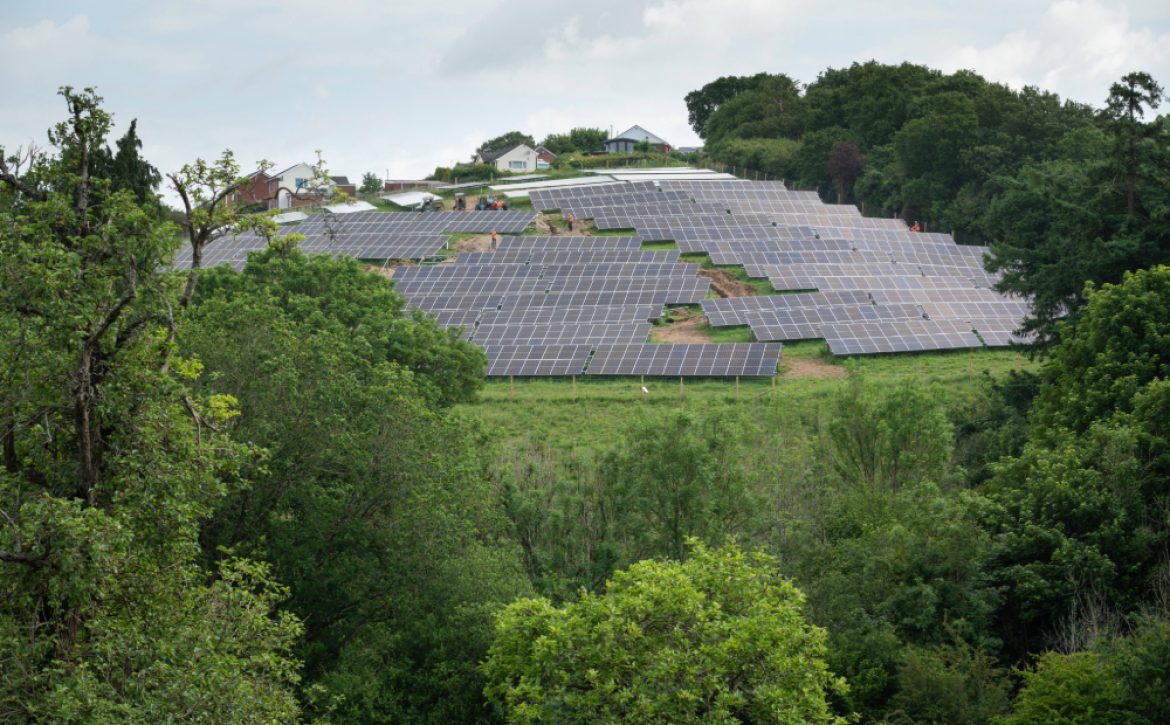
A further £232,000 was saved by the GPA in 2025/26 through its Net Zero and Lifecycle Replacement Programmes, which delivered 220 projects across the entire government estate. This included the installation of nearly 1,400 solar panels at five Civil Service offices – helping to save 550 metric tonnes of carbon dioxide equivalent each year.

The GPA further signalled its commitment to the government’s Plan for Change in 2025/26 by finding and securing Great British Energy’s headquarters in Aberdeen.

On top of this, the agency has continued to deliver for departmental partners throughout the financial year and have reached its target to open a new Government Hub, as the Department for Science, Innovation and Technology moved into 26 Whitehall.

A major milestone was also reached in the delivery of the new Darlington Economic Campus (DEC), as construction works began at Brunswick Street, marked by a breaking ground ceremony attended by the Chancellor of the Exchequer, Rachel Reeves, and Cabinet Office Minister Anna Turley.

Meanwhile, plans to create a new workspace for approximately 8,800 government staff took a step closer as the Outline Business Case for Manchester Digital Campus (MDC) was formally approved by the Treasury.

The ARA report is available here.

23 Stephenson Street, Birmingham – interior – design guide photo
News
[ July 13, 2026 0 Comments ]
[
]

Raising the standard: The GPA sets out new office design guidance

NEW guidelines have been published by the Government Property Agency (GPA) as it continues its mission to create a smaller, better and greener office estate. 

Today (2 July) the GPA launched its updated Government Workplace Design Guide, which outlines improved design standards for government offices.

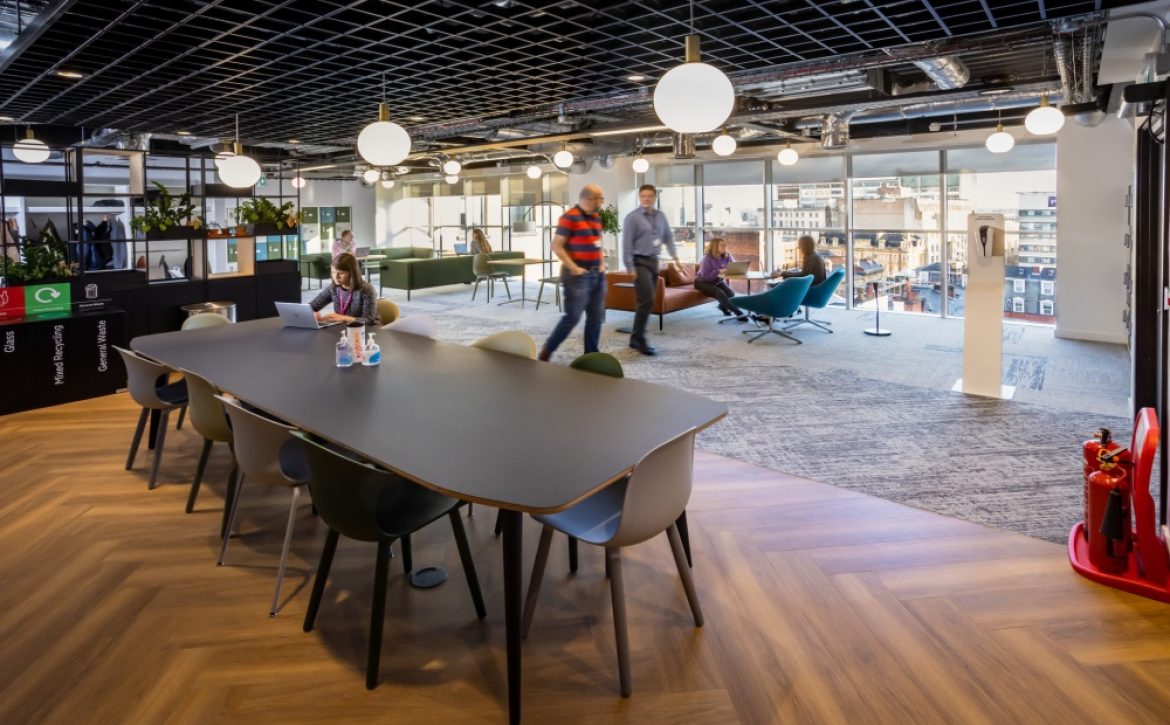
The document introduces the Core Design Requirements (CDR) framework and provides a consistent approach for delivering inclusive, accessible, modern, sustainable and digitally-enabled work spaces.

It is written to provide clarity and consistency for those involved in the commissioning, planning, designing and managing of new or significantly redeveloped government workplaces, ranging from delivery teams to the departments and people who work in these spaces.

The initial Government Workplace Design Guide was published in August 2020, however the GPA has now updated the existing guidance due to the rapid evolution in the way people work in offices. Government departments and industry bodies were consulted during the update, and benchmarking with industry guidance and cost analysis was carried out.,  

Mark Bourgeois, CEO at the GPA, said: 

“The updated Government Workplace Design Guide provides a key framework for delivering work spaces that are inclusive, sustainable and digitally connected – setting the standard for the government office estate now and for the future. It provides the clarity and consistency needed to create modern and high-quality offices which boost the performance, collaboration and wellbeing of civil servants across the country. 

“This new guide signals the GPA’s commitment to supporting the government’s priorities, most notably the Plan for Change and transition to Net Zero, with sustainability embedded throughout our new guidance. We now look forward to working alongside our departmental and private sector partners to ensure the updated guide is adopted across government, as we aim to raise the standard of offices in the UK.”

The guide supports the Government Functional Standard for Property (GovS 004) and is accompanied by a suite of technical handbooks covering architecture, fire safety, Net Zero and sustainability, biodiversity and nature recovery, mechanical, electrical and plumbing as well as historic buildings.

Alongside its guidance on quality and consistency, the new CDR framework includes criteria that provides flexibility on how to respond to the specific context of a government building and the departments based there – reducing redesign costs.

Clear standards are also set for digital connectivity and interoperability, empowering civil servants to collaborate and work productively across various locations. 

Established in 2018, the GPA manages more than 53 per cent of the government office estate and acts as a single landlord for numerous Civil Service departments and agencies. 

It is currently delivering one of the UK’s largest workplace transformation programmes, while promoting economic growth through its Government Hubs Programme, which is creating great places to work for civil servants up and down the UK.

To view the guide, click here.

Apex
Apex RadioNews
[ July 6, 2026 0 Comments ]
[
]

Apex Radio Systems Recognised by Motorola Solutions for Ecosystem Deployment Excellence

Apex Radio Systems has been recognised by Motorola Solutions with a place in the Empower Circle, one of the company’s highest global partner honours.

The company also received the award for Best Ecosystem Solution Deployment, recognising its ability to design and deliver integrated communications solutions across complex operational environments.

The recognition reflects a broader shift within the communications and security sectors, where organisations are increasingly adopting connected technology ecosystems that combine voice, video, software applications, and control room capabilities into a single, unified platform.

These integrated solutions are enabling organisations to improve situational awareness, coordination, and response, particularly in environments where reliability and speed are critical.

Apex Radio Systems has been at the forefront of this transition, supporting customers across sectors including security, public safety, transport, and critical infrastructure.

Ian Curry, Managing Director at Apex Radio Systems, commented:

“Organisations are no longer looking for standalone communication systems – they need integrated solutions that bring together multiple technologies to support faster, more informed decision-making. This recognition from Motorola Solutions reflects the growing importance of ecosystem-based approaches and the role they play in enhancing safety, security, and operational efficiency.”

The Motorola Solutions partner ecosystem plays a central role in delivering mission-critical communications technologies globally. Inclusion in the Empower Circle highlights Apex Radio Systems’ position as a leading partner in deploying advanced, integrated solutions.

Phil Wynne, Business Development Manager at Apex Radio Systems, said:

“Projects like this demonstrate the real value of integrated communications. By bringing multiple technologies together into a single ecosystem, we’ve helped our customer improve day-to-day operations. This has meant clearer communication, better coordination between sites, and a more efficient response to operational challenges.”

As demand continues to grow for technologies that enable real-time communication and coordination, ecosystem-based deployments are expected to become an increasingly important part of the communications and security landscape.

For more information, visit:
www.apexradio.co.uk

New ELFT strategy image
News
[ June 23, 2026 0 Comments ]
[
]

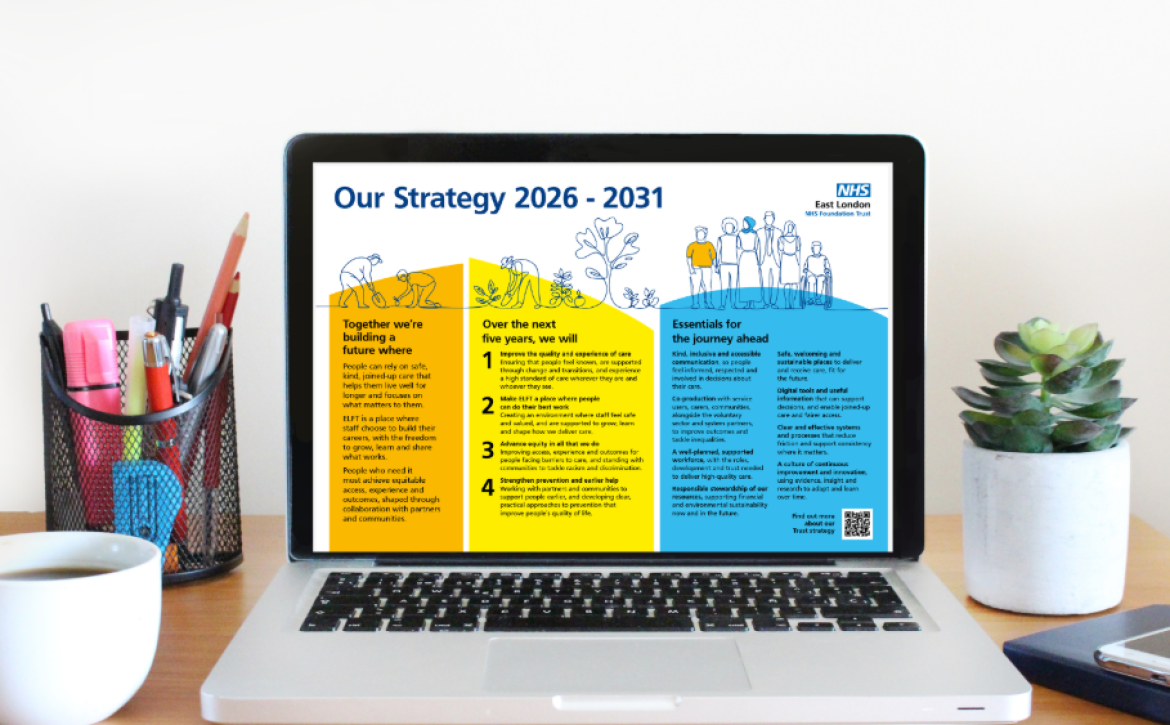
East London NHS Foundation Trust launches new five-year strategy

East London NHS Foundation Trust (ELFT) has launched its new five-year strategy, setting out how it will work with service users, carers, colleagues and partners to improve health, wellbeing and care for local communities between 2026 and 2031. 

 The strategy has been shaped through the Trust’s “Big Conversation”, which engaged more than 1,700 staff, service users, carers, governors, members and partners over the past year. The feedback received has informed a strategy focused on what matters most to the people and communities ELFT serves.  Chief Executive Officer Lorraine Sunduza OBE said:  “This strategy has been developed with and for the people we serve. Through our conversations with service users, carers, colleagues and partners, we heard a clear message about the need for care that is more joined up, more equitable and more focused on what matters to individuals and communities. Our strategy sets out how we will work together over the next five years to improve experiences of care, support people earlier, reduce inequalities and create better outcomes for local people.” Chair Eileen Taylor said:  “I am proud that this strategy has been shaped by such extensive engagement with the people and communities we serve. It reflects our shared values and ambitions, while recognising the challenges ahead. Its success will depend on continued partnership with service users, carers, colleagues and community organisations, and I look forward to seeing the positive difference it makes over the coming years.” The strategy will now guide the Trust’s work over the next five years, supported by local delivery plans developed in partnership with colleagues, service users, carers and system partners.” Serving around 1.8 million people across Bedfordshire, Luton and East London, ELFT provides community health, mental health and primary care services. The new strategy sets out a shared ambition to build a future where people can rely on safe, kind and joined-up care that helps them live well for longer and focuses on what matters most to them.  Over the next five years, the Trust will focus on four strategic priorities: improving the quality and experience of care; making ELFT a place where people can do their best work; advancing equity in all that it does; and strengthening prevention and earlier help.  The strategy responds to the challenges facing health and care services, including growing demand, health inequalities and the need for care to be more connected and sustainable. It also builds on ELFT’s strengths, including its commitment to quality improvement, people participation, inclusion and clinical leadership.  

iStock_21069776_XLARGE
News
[ June 18, 2026 0 Comments ]
[
]

Late-night England matches set to disrupt younger workers’ working patterns, research reveals 

New research from Matrix Booking highlights how major cultural moments like the World Cup are influencing workplace expectations among younger employees 

 London, June 9th: Late-night England World Cup matches are set to significantly disrupt younger workers’ routines, according to new research from Matrix Booking, with more than one in three (36%) of 18-24-year-olds saying they would either be less productive or choose to work from home the following day. 

The study of 2,000 UK office workers found younger employees are significantly more likely than older age groups to change how they work after a late-night game. More than a quarter (27%) also said they would rearrange meetings or workloads after a late-night match. 

Among 18–24-year-olds, one in five (21%) said they would start work later than usual after a late-night match, while one in seven (15%) admitted they would call in sick the next day — compared to just 4% of UK office workers overall. A further 12% said they would pretend to have a personal appointment so they could start work later, double the national average (6%). 

The findings also reflect wider expectations around flexibility and work-life balance across the entire workforce. Nearly half (48%) of UK office workers said they would feel more positive about their employer if they were offered flexibility during major sporting or cultural events, such as the option to work remotely or start later the next day. 

Adjusting work around major sporting and cultural events is already relatively common among UK workers. Nearly a third (30%) said they have changed their working hours or location at least once in the past 12 months to accommodate a major event, while 15% said they had done so two to three times. Among 18–24-year-olds, this behaviour is even more pronounced, with 30% making adjustments two to three times and a further 12% doing so four to five times. 

The research also suggests major sporting events could influence office attendance, with more than two in five (42%) workers saying they would be more likely to go into the office if their employer was showing the match there. This rises significantly among 18–24-year-olds, with 58% saying they would be more likely to go in. 

Regional differences were also evident in the findings, with London workers among the most likely to adjust their schedules following a late-night England match. Almost a third (29%) said they would choose to work from home the following day, while 26% would start work later than usual and 25% would rearrange meetings or workloads. As a result, over a third (31%) said they would be less likely to go into the office the next day. 

By contrast, workers in Wales and the South West were among the least likely to say a late-night match would affect their working patterns, with half (50%) saying it would have no impact on how they work the next day. In Northern Ireland, 62% of workers would you be more likely to go into the office on a match day if their employer was showing the game there.  

Karl Breeze, CEO at Matrix Booking, said: “Major cultural moments like the World Cup are increasingly influencing how people choose to work, particularly among younger employees who place a high value on flexibility and work-life balance. 

“These events also present an opportunity for employers to think differently about workplace culture and office attendance. Organisations that can create more adaptable and responsive workplaces will be better placed to support their people and build stronger, more engaged teams.” 

As hybrid working continues to evolve, moments like the World Cup are becoming a real-world test of how adaptable organisations are, and how closely workplace expectations align with the priorities of today’s workforce. 

iStock-473470868-5
CBRENewsUncategorized
[ June 5, 2026 0 Comments ]
[
]

CBRE Launches Experience by Industrious, Elevating Its Workplace Hospitality Offering

New platform delivers experience services to building owners and corporate occupiers, and serves as a launchpad for new experience-focused products

CBRE, on June 3rd, announced the launch of Experience by Industrious, a new brand and operating model that doubles down on the company’s workplace hospitality services.

Experience by Industrious brings together more than 7,000 CBRE employees already delivering front-of-house services across 2,500 buildings worldwide. It combines CBRE’s scale and reach with the hospitality operating system Industrious spent 13 years building to raise that work to a substantially higher standard.

Leading this effort is Anna Squires Levine, CBRE’s first Global Head of Experience Services. Levine spent a decade as a top executive at Industrious, most recently serving as President. Industrious, known for operating more than 300 premium flex office locations across 10 countries, was fully acquired by CBRE in early 2025. 

Experience by Industrious runs the experience of being in a building: the arrivals, the interactions, the service recovery, the culinary strategy and other partnerships — the small moments that determine how employees feel when they show up to work. The first new product is experience in headquarters and executive environments, where the building experience is so visibly a direct representation of the company’s purpose and culture. This product is focused on food & beverage, high touch service and the operating systems required to consistently deliver a stellar experience.

The new operating model is designed to apply in any environment where the experience of showing up to work matters — hospitals, manufacturing sites, logistics centers, labs and data centers, among them. It is available to both occupiers and building owners.

“Our new offering is built on a belief that most organizations have underinvested in this layer — not because they don’t care, but because there hasn’t been a disciplined, measurable way to deliver it at scale,” Levine said.

“A building is just a building until people start showing up in it,” she continued. “You can design the physical space perfectly and still have people going through the motions once they get there. I believe people put in their best effort when they feel genuinely seen and cared for — when someone greeted them by name, when the room was set up exactly right, when a small thing went wrong and somebody fixed it before they even noticed. That’s what we deliver. And at the scale CBRE operates, the opportunity to add that kind of joy to people’s working days is enormous.”

The stakes are real. According to Gallup’s 2026 State of the Global Workplace report, global employee engagement has fallen to 20%, its lowest level since 2020. Gallup also found that companies with high engagement report 18% better productivity and 23% better profitability than those with minimal engagement. 

What distinguishes Experience by Industrious from conventional front-of-house services is its operating model that brings as much rigor to experience as already exists in facilities management and engineering using Industrious’ four-step methodology: set a measurable North Star outcome — a clear statement of how employees and guests should feel in the building; cascade that into an operating plan, including quantitative goals and performance incentives all the way to the front line; operate against that plan with extreme accountability and teamwork; measure results and iterate until the outcome is achieved.

The model works across all types and sizes of workplaces. A flagship headquarters might have a dedicated General Manager overseeing all operations and vendors across the building as a single hospitality point of contact. In other environments, it means applying the same principles — shared standards, aligned incentives and real measurement — alongside CBRE’s existing facilities management and property management work.

“The companies that win the competition for talent have decided that how their people feel at work is a business priority, not an afterthought,” said Jamie Hodari, CBRE’s CEO of Building Operations & Experience and Chief Commercial Officer. “Anna built some of the best workplace experiences in the world at Industrious. We now have the chance to bring that operating system to thousands of buildings around the world.”

For building owners, Experience by Industrious connects tenant experience directly to asset performance — leasing velocity, renewal rates and amenity utilization — with measurable targets and quarterly reviews. For occupiers, it translates a company’s culture and values into the daily texture of being at work.

Moye_UoE_Sustainability_001
News
[ May 11, 2026 0 Comments ]
[
]

University of Exeter on turning net zero ambition into assured action

University of Exeter is advancing its net zero ambitions through a collaborative, data-driven approach to sustainability reporting, supported by its longstanding partnership with TEAM Energy. As a research-intensive institution with global influence in climate and environmental science, Exeter is committed to ensuring that its operational performance reflects the leadership demonstrated through its teaching and research.

“As a research university with a lot of climate scientists, we have to walk the walk,” explains Tim Dennett, Sustainability Manager at the University of Exeter. “The University needed to step up and show that it can be a leader in this space, not just in the research it produces but in action.”

Central to Exeter’s strategy is a robust sustainability reporting framework that supports transparent decision‑making, assured data, and meaningful engagement across the organisation.

Turning climate leadership into operational action

Achieving net zero is a core strategic priority for the University of Exeter, driven by institutional responsibility, stakeholder expectations, and student demand. With many academics contributing directly to international climate policy and research, aligning operational delivery with academic leadership is essential.

“It aligns very clearly with the research the university is producing, the teaching we’re doing, and it’s a huge thing the students want to see as well,” says Tim. “Some students are choosing universities based on sustainability and how sustainable change is being implemented.”

Carbon reduction initiatives across the estate include large-scale LED lighting upgrades, building management optimisation, on-site renewable generation, air-source and ground‑source heat pumps, electric vehicle infrastructure, and planned wind generation at the Penryn campus.

Embedding a culture of sustainability

Through the development of its Climate Strategy, the University has place strong emphasis on embedding a culture of sustainability across teaching, research and operations. Its institutional response focuses on aligning robust data with action and clear communication to support the delivery of its net zero targets.

To help drive this, a Sustainability Culture Change Task & Finish Group has been established and is currently collating benchmark metrics to be hosted within a data dashboard. These indicators will enable the University to demonstrate behaviour change over time

Behavioural change initiatives already play a vital role in reducing emissions while enhancing engagement across the university community. One such example is Exeter’s Gift It, Reuse It scheme, which redistributes unwanted items left in student accommodation to incoming students.

The need for robust, flexible sustainability reporting

As the University expanded its focus to include Scope 3 emissions, it became clear that traditional energy management systems could no longer meet the complexity and scale of Exeter’s reporting requirements.

“When we declared a climate emergency and committed to incorporating Scope 3, we spent years trying to make existing systems work,” explains Melissa Summerfield, Sustainability Reporting Manager at the University of Exeter. “But nothing gave us the flexibility needed for such a wide range of data. We needed something more bespoke, something that could truly monitor all emissions.”

Working closely with TEAM Energy, the University adopted a sustainability reporting solution designed to support bespoke Scope 1, 2 and 3 reporting, automate data flows, reduce analytical effort, and maintain full traceability.


“Senior management were keen to have a robust system and process in place,” Tim explains. “Reducing analytical time while keeping flexibility was essential, and the reporting framework supports that balance.”

Auditability was a core requirement, particularly as emissions data is externally assured.

“We need to be able to track a single number all the way back to its source,” says Tim. “The system allows us to do that, which provides confidence for leadership, auditors and insurers alike.”

Insight, assurance and engagement at every level

A defining feature of Exeter’s reporting framework is its ability to present tailored insights for different audiences across the University. From leadership dashboards and operational reporting to student engagement and external disclosure, the system supports unlimited dashboards and flexible visualisation through Power BI integration.

“We have many stakeholders with very different needs,” Melissa explains. “The ability to present the same data in different ways, without being restricted to predefined dashboards, has been hugely important.”

Automation and validation rules ensure data quality, while external assurance has further strengthened confidence in the reporting process.

“Assurance has been hugely beneficial,” Melissa adds. “It ensures our data is reliable, but it also helps us identify where processes and documentation can be improved year on year.”

A collaborative partnership approach

Both Tim and Melissa emphasise the importance of collaboration in Exeter’s ongoing partnership with TEAM Energy. Rather than relying on a rigid, third‑party system, the relationship has focused on co-developing tools that reflect real‑world reporting needs while retaining flexibility for future requirements.

TWP DPR Banner OLH-2
News
[ April 29, 2026 0 Comments ]
[
]

The Work Project Opens London’s Highest Specification Flexible Workspace at One Leadenhall

30,000 sq ft of luxury office suites and meeting facilities now open across levels 22–23 of the City’s newest landmark tower.

Occupying levels 22 and 23 of Brookfield Properties’ landmark tower at 1 Leadenhall Street, TWP’s Leadenhall coworking office offers 360-degree, unrestricted panoramic views across the London skyline. The fit-out, by Sydney-based boutique practice Farago Han Studio, draws on the heritage of the adjacent Grade II*-listed Leadenhall Market, interpreting its Queen Anne Revival architecture in a contemporary register across arrival galleries, private lounges, and bespoke office suites. Abundant natural light across both floors is a consistent feature, by design rather than by coincidence.

The location places members at the centre of the City’s established financial cluster. For firms working in London’s CBD, Liverpool Street, Bank, and Monument stations are all within easy walking distance, as is the retail and dining offer of Leadenhall Market itself. Lloyd’s of London, Aon, and Willis Towers Watson are among the major institutions in the immediate vicinity.

Workspace Options and Facilities

Standard Offices accommodate teams of 5 to 20, while Enterprise Offices serve teams of 20 or more. A Standard Office will also provide access to shared meeting rooms and phonebooths in the common area, whereas Enterprise Offices come with dedicated meeting rooms and phonebooths within the office suite.

Both formats including client branding opportunities at their office entrance wall for a personalised experience upon arrival.

Across the two floors of the Leadenhall Street offices, members have access to a business lounge, fully equipped meeting rooms bookable on an hourly or daily basis, a dedicated corporate event space, reception and secretarial services, private phone booths, and a pantry. The membership also includes global access across TWP’s portfolio of 20 locations in Singapore, Hong Kong, and Australia, alongside a programme of networking and community events and a member perks scheme. Premium dining and retail options are available within One Leadenhall itself, in addition to the broader offer of the surrounding area.

Junny Lee, Founder and CEO of The Work Project, said: “One Leadenhall was always our intended starting point in London, with the intent to create an office environment that sets the bar for premium flexible workspaces in the City of London. The organisations we have attracted since January reflect exactly who this space was designed for: established businesses that want the address, the environment, and the service standard to match their own client expectations.”

Early Take-Up and UK Expansion

Since opening in January 2026, the space has reached 60% occupancy, with take-up concentrated among firms in insurance, banking, private equity, and technology.

The One Leadenhall opening is the first step in a broader UK rollout. TWP is targeting a portfolio of approximately 400,000 sq ft across the City and West End by 2030, expanding its offer for businesses working across London’s CBD and beyond, with further locations in similarly prestigious buildings planned.

iStock-636221310
News
[ April 2, 2026 0 Comments ]
[
]

Manchester Digital Campus Confirmed: Government progressing landmark hub

Approval granted for a cutting-edge Civil Service campus in Manchester to drive forward world-class digital capability and services for the public.

The government has taken a major step forward on the Manchester Digital Campus (MDC) today, with the outline business case formally approved by the Treasury.

Built on brownfield land in central Manchester, the campus will bring together approximately 8,800 people from multiple government departments with a focus on digital work. It is a significant driver for the government digital and data strategy and a key commitment by the government’s Places for Growth programme.

It is a Cabinet Office programme principally delivered by the Government Property Agency (GPA) in close collaboration with the multiple government departments involved.

Once operational – targeted for 2032 – MDC will provide approximately 900,000 sq ft of purpose-built workspace across two buildings. The new campus demonstrates Places for Growth in action, helping to harness the North West’s digital expertise and fostering collaboration across departments and the wider digital sector in the region.

Construction is expected to support approximately 4,900 direct jobs over a four-year build period.

As it gains momentum, the campus programme will also help the government reach its ambition of having one in ten civil servants in technology and digital roles by 2030 – currently just over five per cent. The wider MDC delivery programme will play a highly significant part in galvanising technology and digital functions and operators in the region in anticipation of the campus opening, which will shift momentum towards meeting this ambition.

Philippa Harvey, Senior Responsible Owner for the MDC Programme:

“This is the end of the beginning for a programme that has required extraordinary commitment from a huge number of people across government, in Manchester, and across the wider region. MDC is not just a new building – it is a transformation of how government works, bringing together digital expertise at scale in a world-class environment, fully embedded in the community we serve. I am enormously proud of what has been achieved by all involved and excited about what comes next.”

Cllr Bev Craig OBE, Leader of Manchester City Council, said:

“This is a significant announcement for our city. The Manchester Digital Campus will be a landmark programme that cements Manchester’s growing global reputation in Digital and Cyber industries, creating major opportunities for residents and a huge boost to our city.

“Transforming a derelict site will see thousands of Government jobs concentrating in Manchester, as well as supporting 4,900 construction jobs and an unprecedented £2.3bn in social value investment that will directly improve the lives of Mancunians and the communities they call home.

“This is also a clear commitment by this Government to invest in Manchester and a statement that northern investment is good for our city and our region, and it’s also good for the economic growth of the UK.”

  • 1
  • 2
  • 3
  • …
  • 6

From the publishers of
Facilities Management Journal

WHEN

Tuesday 20 October 2026
09:30 - 17:00

Wednesday 21 October 2026
09:30 - 16:30

WHERE

Main Hall
Business Design Centre
52 Upper Street,
London
N1 0QH
UK

Copyright © 2026 KPM Media Events Ltd. All Rights Reserved - Terms and Conditions - Privacy Policy